

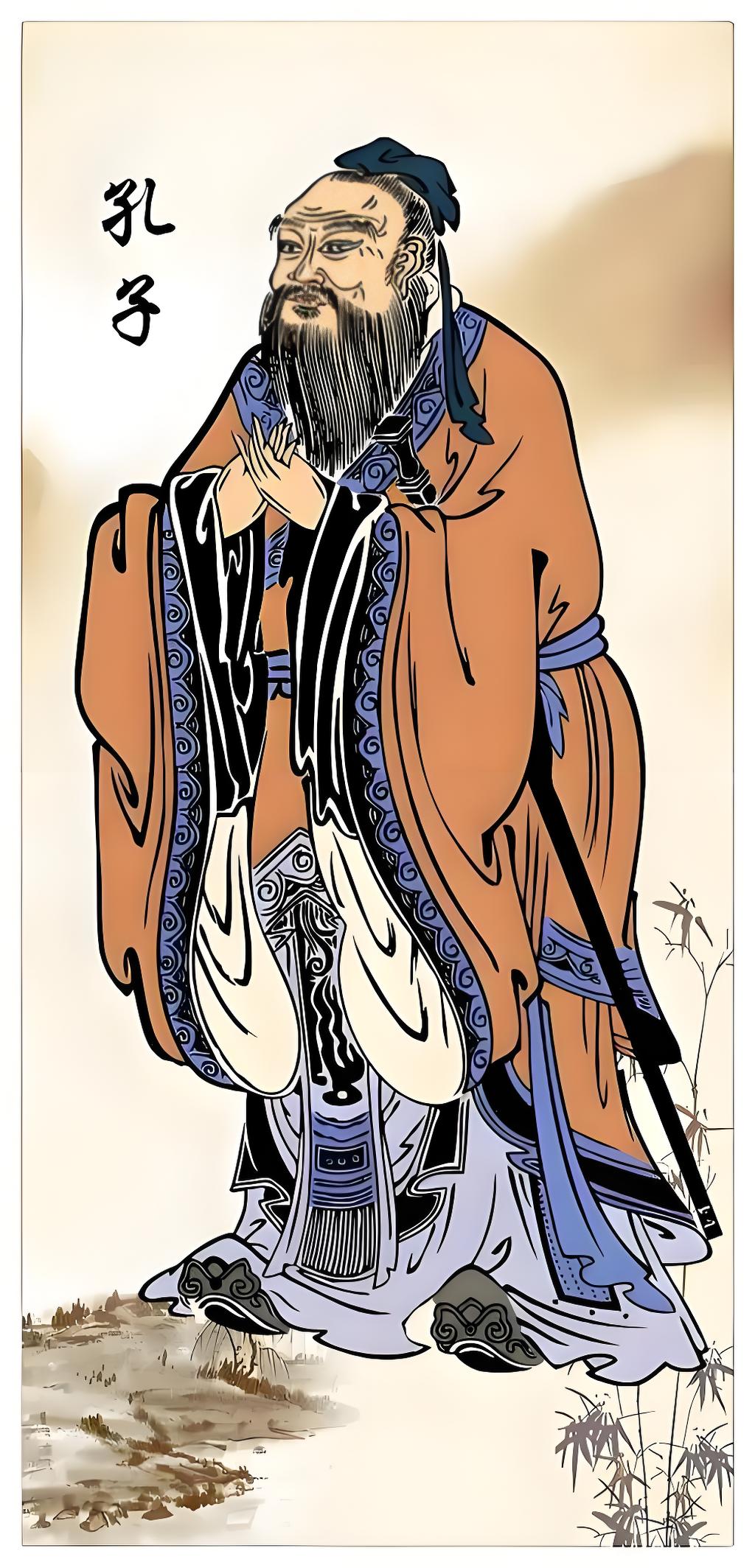
“Lately, everyone seems to be marinating in the same collective anxiety: ‘If AI can write my copy, draw my illustrations, and draft my business plans, what’s left for me?’ We’re terrified that because a machine can do the work faster and cleaner, we’re somehow becoming obsolete. But here’s the thing—about 2,500 years ago, a philosopher named Confucius already handed us the antidote. It’s a simple four-word concept: Junzi Bu Qi—The noble soul is not a tool.”
I. Where Does This “Tool-Person” Anxiety Actually Come From?
Right now, it feels like the ground beneath us is constantly liquefying. You spend months mastering a new piece of software or a professional skill, and before you’ve even settled into it, a new AI update makes that specific knowledge redundant. We’ve started to view ourselves as “spare parts” with an expiration date, terrified that a shiny new model is about to roll off the assembly line and replace us.
But why do we feel this way? It’s because for the last century, society has been training us exactly how to be “effective tools.” You’re the graphic designer, he’s the accountant, I’m the coder. We’ve been taught to sand down our rough edges and polish our specialized surfaces so we can fit perfectly into a specific slot in a corporate machine.

Here’s the trap: The more you define yourself as a specialized tool, the easier it is for AI to replace you. Because machines were literally born to be tools.
II. The Trap of the Vessel: You’re a Living Soul, Not a Coffee Mug
In ancient Chinese, the word Qi (器) refers to physical vessels—cups, bowls, jars—things with a very specific, fixed use. A cup is for holding water; a pot is for pouring tea. They are magnificent at what they do, but they are “locked in” by that function. They have no choice in the matter.

When Confucius said “The noble soul is not a tool,” what he meant was: A person with a mind and a spirit should never allow themselves to be reduced to a single, dead function. If you define yourself solely as “a writer” or “a spreadsheet maker,” you’re going to be looking over your shoulder forever. Why? Because the moment a faster “writing machine” or “spreadsheet engine” shows up, your seat is gone. But if you define yourself as a “living, breathing problem-solver,” the game changes completely.
III. AI Handles the “Task,” You Provide the “Spirit”
In terms of pure execution, AI is the ultimate tool. It doesn’t sleep, it doesn’t get cranky, and its speed is borderline supernatural. But it has one fatal weakness: It has absolutely no idea why it’s doing what it’s doing. It has no skin in the game. It has no heartbeat.

This is where the power of being “not a tool” comes in:
- AI produces the output; you provide the taste. AI can spit out a hundred different logos or slogans in ten seconds, but it has no idea which one has that “spark”—that intangible quality that actually moves a human heart. That choice is yours.
- AI is the engine; you’re the navigator. The machine knows how to run fast, but only you can decide where it’s going and, more importantly, whether the destination is even worth the trip.
IV. How to Find Your Footing in This New Era
To stop being a “tool-person,” you have to “jailbreak” your own identity. Here is how you do it in plain English:
1. Lean into your “useless” hobbies. Stop worrying if everything you do is “productive.” If you love history, or you’re obsessed with cooking, or you like to spend your weekends restored old furniture—do it. These seemingly “useless” layers of your personality are actually your biological firewall. AI struggles with “cross-pollination.” It can’t easily replicate the way a lover of 19th-century poetry might approach a modern marketing problem. Your quirks are your competitive advantage.
2. Practice the “un-calculatable” skills. Focus on the things that can’t be turned into a spreadsheet. Things like deep empathy, understanding the hidden subtext in a room full of people, or having the “gut feeling” to know when a project is heading off a cliff even when the data looks fine. These aren’t just “soft skills”; they are the only skills that are truly future-proof.
3. Don’t be afraid of the “unproductive.” Modern life has us obsessed with “optimization.” We feel guilty if we aren’t “hustling” or learning a new framework. But productivity is a metric for machines. Reading a book for fun, staring at the moon, or just playing a game with your kids—these things might have zero “ROI” in a corporate report, but they keep your brain flexible and stop you from being “formatted” by the technology you use.
V. Summary: You’re the Swordsman, Not the Sword

The moment you stop viewing yourself as a “spare part,” AI stops being your rival. The relationship is actually very simple: AI is the legendary sword, but you are the hero holding it.
The sword can be incredibly sharp and perfectly balanced, but it cannot decide who to protect, when to strike, or when to keep the blade in its sheath. That wisdom, that intent, and that “human touch” belong entirely to you.
In this age of overflowing AI, the ultimate form of security isn’t about what high-tech gadget you have in your hand. It’s about having a soul that refuses to be put in a box.
