
Every year on June 7th and 8th, the entirety of China holds its collective breath. Traffic is rerouted around schools, construction sites fall silent, and millions of teenagers march into classrooms to face the Gaokao—the National College Entrance Examination.

To a Western observer, the sheer scale and intensity of the Gaokao might look like an unfathomable pressure cooker. But to understand this modern spectacle, you have to realize that Chinese students aren’t just taking a test; they are participating in a 1,000-year-old cultural tradition of using exams to hack the social hierarchy. From ancient scholars burning the midnight oil over Confucian scrolls to modern teens drowning in a sea of mock physics papers, it is the exact same pursuit.
It is the pursuit of the ultimate equalizer.
The Pre-Exam Dark Ages: The “Nepo Baby” Era
Before we had standardized testing, the ancient world was a bleak place for anyone not born with a silver spoon. During the Wei, Jin, and Northern and Southern Dynasties (roughly the 3rd to 6th centuries), China ran on the “Nine-Rank System.”
To put it bluntly, this was the ultimate VIP, invite-only, nepotism-driven hiring model. The government appointed “Arbiters” to evaluate talent and recommend officials. Unsurprisingly, when you put all the hiring power into the hands of a few well-connected elites, the criteria quickly devolved from “Is this person competent?” to “Who is his father?”
The class barriers back then were made of titanium. You could be the brightest, hardest-working kid in the village, but if your family background was listed as “peasant,” your resume went straight into the ancient equivalent of the shredder.
Enter the Keju: Meritocracy Enters the Chat
The Sui Dynasty (581–618 AD) finally stepped in and flipped the game board, putting an end to centuries of the “my dad is better than your dad” game. They invented the Keju (the imperial examination system), officially launching the world’s first meritocratic civil service exam.
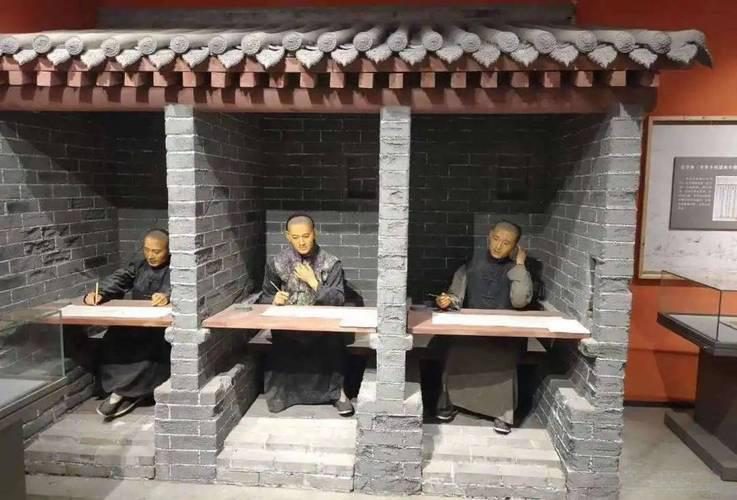
This was easily one of the most radical institutional innovations in global history. It tore down the iron curtain of social class and established a brutally simple rule: We do not care about your pedigree; we only care about your score.
- The Tang Dynasty polished the system, allowing scholars to flex their creative muscles through poetry and essays.
- The Song Dynasty pushed it to its absolute peak, heavily expanding the quotas for candidates.
The Song Dynasty actually produced the most legendary “All-Star” exam roster in history. In 1057, under the supervision of the master essayist Ouyang Xiu, the exam passed a staggering lineup of future literary giants—including Su Shi, Su Zhe, and Zeng Gong. Imagine a single Harvard admissions cycle accepting Shakespeare, Einstein, and da Vinci all at once. That is the power of a healthy, optimized selection system: it mass-produces generational talent.
The Hangover: Zombies of the “Eight-Legged Essay”
But any system, if left simmering in the pot for too long, goes sour.
By the time the Ming and Qing dynasties rolled around, the once-glorious Keju had ossified into the notorious “Eight-Legged Essay” (Baguwen). The rules became terrifyingly rigid. Candidates were strictly confined to the Four Books and Five Classics. You couldn’t share personal opinions, debate current events, or propose practical solutions to real-world problems. You had to follow an obsessive-compulsive structural formula regarding word count, sentence length, and rhythmic pairing.
The exam had mutated from a tool of social mobility into a factory for compliant, test-taking robots. Countless scholars spent their entire lives memorizing rigid templates, studying until their hair turned white, yet couldn’t write a single practical essay on how to govern a city or manage a famine.
Faced with a rapidly modernizing globe and Western industrialization in the late 19th century, China realized that scholars who only knew how to quote Confucius in an eight-part harmony couldn’t build railways or command navies. In 1905, the 1,300-year-old Keju system was finally, mercifully, put out of its misery.
The Evolution: Comparing the Ancient and the Modern
To see how far the system has evolved while keeping its core philosophy intact, we just need to look at the transition from the ancient Keju to the modern Gaokao.
| Feature | The Ancient Keju | The Modern Gaokao |
| Ultimate Goal | Direct government employment (becoming an official) | University admission (higher education across all fields) |
| Curriculum | Exclusively Confucian classics, literature, and rigid rhetoric | STEM, humanities, arts, sports, and current events |
| The Vibe | Calligraphy brushes, inkstones, and existential dread | Gel pens, energy drinks, and existential dread |
The Modern Gaokao: Brutal, Exhausting, but Unapologetically Fair
After a chaotic “Wild West” period during the Republic era—where universities ran their own wildly inconsistent, highly unequal admission tests that heavily favored wealthy urbanites—the modern Gaokao was officially born in 1952.
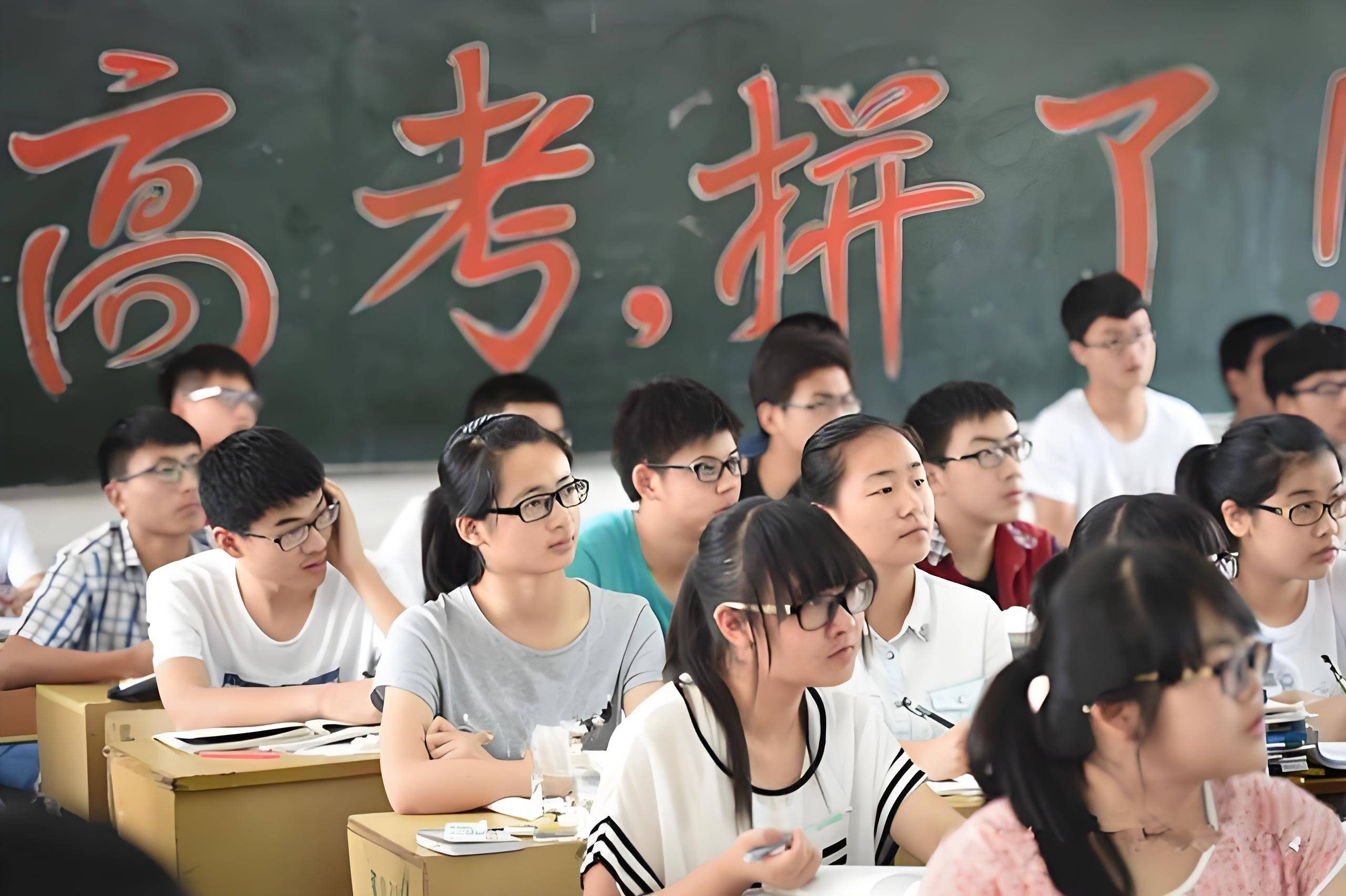
Today, Chinese students often lament the “involution” (intense, draining competition) of the Gaokao. The pressure is astronomical. But buried beneath the towering stacks of flashcards and mock exams lies an undeniable truth: It is the fairest game in town.
The Gaokao features blind grading. It does not look at your parents’ tax returns. It does not care if your uncle plays golf with a university dean. It doesn’t care about your zip code, your legacy status, or your extracurricular yachting club. A kid from a remote mountainous village studying under a bare bulb takes the exact same test, under the exact same conditions, as a billionaire’s child in Shanghai.
“You cannot choose where you start in life, but you can fight tooth and nail for where you end up.”
This pure, unadulterated “effort-to-reward” logic is a rare commodity in today’s world. The modern Gaokao has stripped away the rigid dogma of the ancient imperial exams. It tests critical thinking via literature, logic via advanced calculus, and awareness via current global events. It no longer demands “template scholars”; it demands modern minds capable of powering artificial intelligence and space exploration.
There is no perfect system. The Gaokao brings anxiety, tears, and a gruelling teenage experience. But across the vast arc of Chinese history, it remains the ultimate guarantor of bottom-up mobility. The exams have changed, the subjects have modernized, but the youthful fire in the examination halls remains exactly the same. It is a 1,000-year-old promise to the ordinary person: Your fate is not sealed at birth; it is waiting at the tip of your pen.
