

Forget the sterile geopolitical analyses you read in the morning papers. If you want to understand the absolute meatgrinder currently chewing up the Persian Gulf, you have to look at it through the cold, unsentimental lens of a military contractor who cares about one thing: leverage. Sun Tzu didn’t write The Art of War to inspire peace treaties; he wrote it to explain how not to bankrupt your state and slaughter your own men for zero strategic gain.
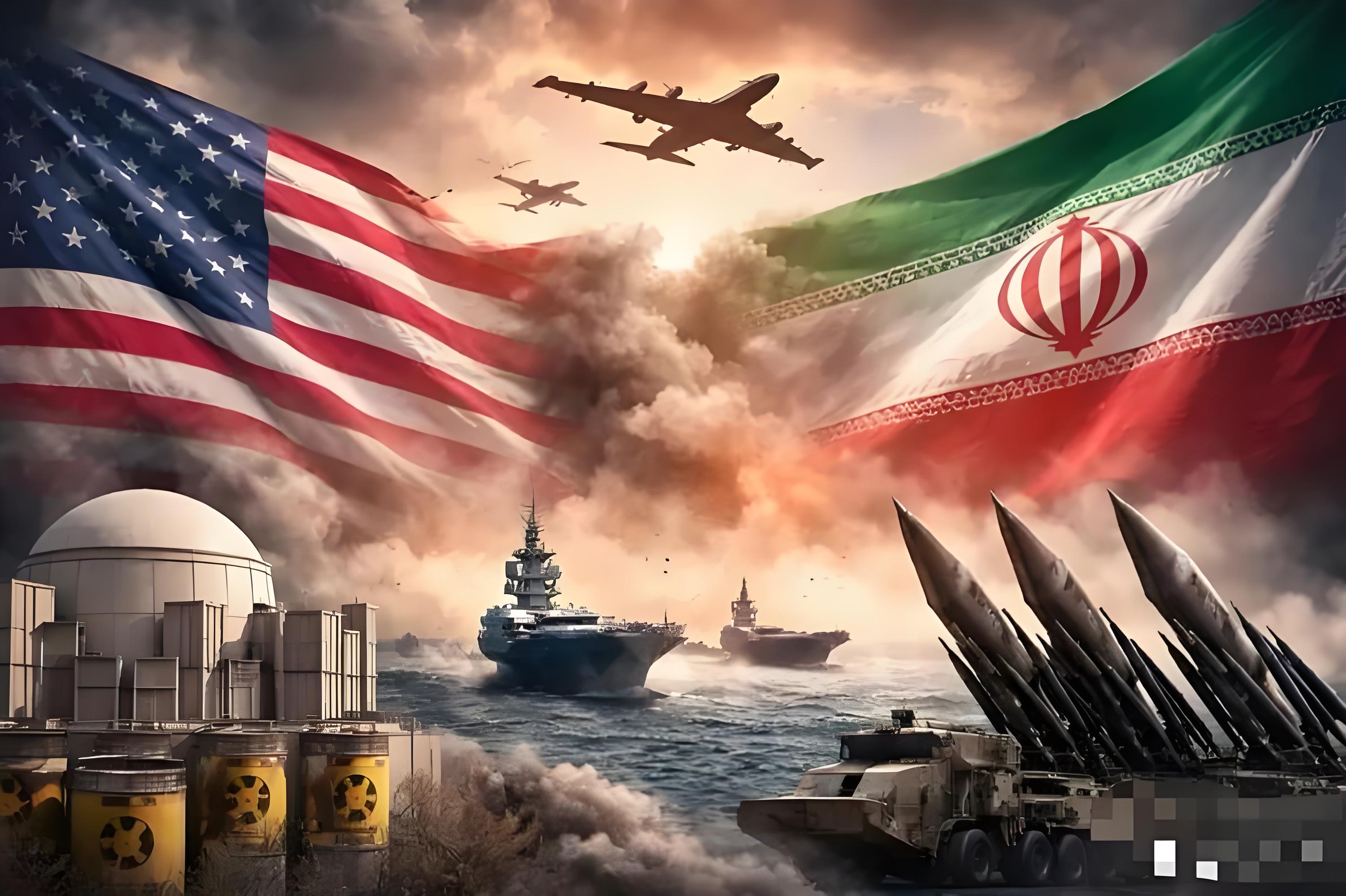
Right now, the US-Iran conflict is providing a terrifying masterclass in what happens when you ignore the basic math of warfare.
Let’s look at the board. We are in week three. If you listen to the talking heads on cable news, they’re hyperventilating about a massive American ground invasion. They track the USS Boxer steaming in from San Diego and the USS Tripoli dragging the 31st Marine Expeditionary Unit all the way from Japan. You’ve got about 5,000 fresh personnel bobbing on the water, pushing the total US troop presence in the region to nearly 50,000. The armchair generals are practically frothing at the mouth, predicting a D-Day style assault to seize Kharg Island and lock down the Strait of Hormuz.
But pull out a topographical map and dust off the chapter on Terrain.
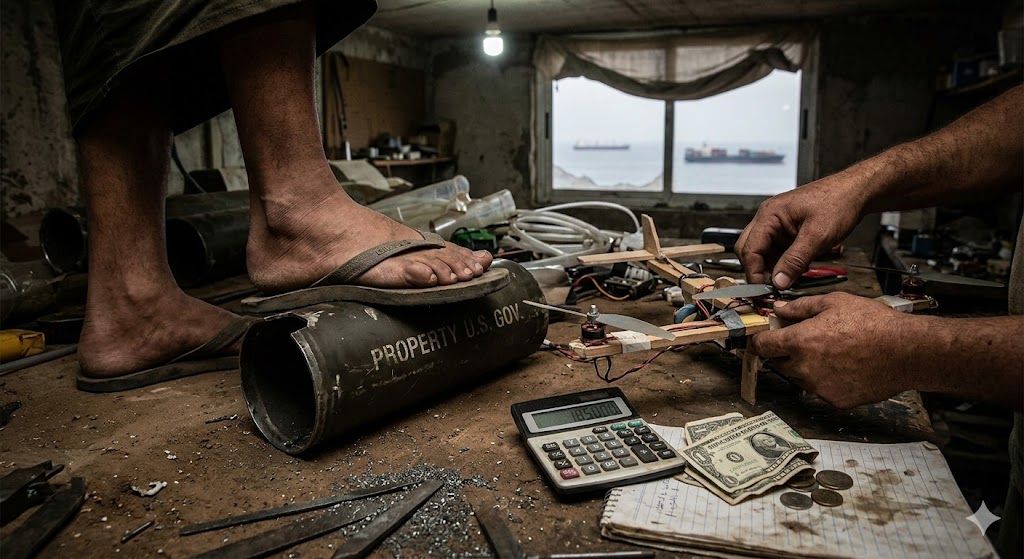
Hormuz isn’t a flat parking lot where you can just roll a column of Abrams tanks and declare victory. It is a geographical nightmare. It’s a narrow, jagged choke point surrounded by hostile, fortified cliffs packed to the brim with anti-ship missiles. Let’s talk numbers. In 1991, the US coalition needed 600,000 troops to push Saddam Hussein out of a relatively flat, open desert. In 2003, it took 200,000 boots on the ground to take Iraq.
You think 50,000 guys are going to conquer the mountainous, heavily entrenched Iranian coastline? Please. Throwing a ground invasion force into that funnel wouldn’t be a tactical operation; it would be a heavily armed suicide pact. It would be stepping right into the “Death Ground” Sun Tzu explicitly warned commanders to avoid at all costs.
And here is the kicker: Washington knows it.

That is why the real story isn’t the missiles lighting up the night sky over the Gulf. It’s the quiet, desperate scrambling happening in the backrooms of Doha and Cairo. While the Pentagon puts on a multi-billion-dollar fireworks display to look tough, the Trump administration is secretly routing Steven Witkoff and Jared Kushner through Egypt and Qatar to beg for a ceasefire.
Just pause and digest that. The US parked a massive amphibious assault force off the coast, not to breach the beaches, but as an incredibly expensive, highly visible bluff to force a negotiation.
Sun Tzu laid down a very strict rule for the negotiating table: “He who wishes to fight must first count the cost.” You do not get to demand the terms of a conqueror when you are demonstrably terrified of the actual fight. Look at the terms Washington handed to Tehran. They want Iran to reopen the Strait of Hormuz, completely dismantle their nuclear and ballistic missile programs, and totally cut off their regional proxies—Hamas, the Houthis, and Hezbollah. It reads like a fantasy wishlist drafted by someone who thinks they just captured the enemy’s capital.

Iran’s response was a masterclass in recognizing a bluff. They fired back six counter-demands that basically told Washington to pack up and leave their credit card behind. Permanent ceasefire. Total eviction of all US military bases from the Middle East. War reparations. Rewriting the security architecture of Hormuz on Iranian terms.
Why is Tehran acting so completely unbothered? Because they looked across the table and realized the guy threatening them doesn’t have the stomach to pull the trigger on a ground war. The conditions on the battlefield haven’t fundamentally changed in America’s favor, so why would Iran concede a single millimeter?
Meanwhile, the reality in the air and on the ground is shifting violently. The Islamic Revolutionary Guard Corps (IRGC) is done playing pure defense. They have flipped the script.
“Security against defeat implies defensive tactics; ability to defeat the enemy means taking the offensive.” Iran took that ancient advice and weaponized it. They are launching waves of advanced drones and ballistic missiles, adopting entirely new tactical formations. They aren’t just shooting at empty sand; they are actively pounding US bases in Saudi Arabia, Bahrain, and the Kurdish regions.
But the most glaring, flashing red light of this entire conflict? The strike on Israel’s Dimona nuclear facility.
Forget the physical damage assessment for a second. The strategic message of hitting Dimona is absolutely deafening. It proved to the world that the vaunted, multi-layered air defense networks of the US and Israel are suffering from severe fatigue. The Patriots and Iron Domes are choking on the sheer, relentless volume of Iranian ordnance. The technological armor is cracking, showing that Iran’s tactical evolution is bleeding the coalition dry.
When the Trump administration threw out a tough-sounding “48-hour ultimatum,” Tehran didn’t even blink. They responded with a cold, calculated threat: bomb our major cities or critical infrastructure, and we will hit you with a level of retaliation that is entirely “beyond expectation.” They aren’t acting like a cornered proxy. They have a clear, unbending strategic spine and they are dictating the tempo of the escalation.
So where exactly does this leave the tired American military machine?
Trapped in a cognitive dissonance loop. Washington insiders are already leaking that this isn’t going to be a quick, televised victory. It’s going to grind on for weeks, maybe longer. There is no decisive, Hollywood ending waiting at the bottom of this crater. The White House is desperately searching for a diplomatic off-ramp, but they are paralyzed by their own arrogance.
They cannot achieve battlefield supremacy, yet they refuse to drop their maximalist demands at the negotiating table. “We can’t beat you, but you still have to surrender.” It’s a strategy practically designed in a lab to fail. It mirrors the brutal, grinding reality we see in Ukraine right now: two sides staring at each other through the gun smoke, both hunting for a diplomatic window, but neither willing to give up a single chip.
This mess is about cold, hard leverage. The US marched an army to the edge of the cliff, looked down at the rocks below, and got a severe case of vertigo. They want to project strength, but they are terrified of the political and human cost of a ground war. Iran is simply sitting in the bunker, absorbing the initial shock, and slowly ratcheting up the pain on American assets.
If you deploy your military without a viable, realistic plan for victory, and you try to negotiate without the leverage to enforce your terms, you don’t get peace. You just get a very long, very bloody, and very expensive stalemate. That’s not a tragedy; that’s just math.
