

In the year 1020 AD, a philosopher named Zhang Zai (张载) was born in Northern China. Though he spent much of his life as a quiet scholar and hermit near Mount Hengqu, he authored four short lines that would become the spiritual DNA of Chinese intellectuals for the next millennium.
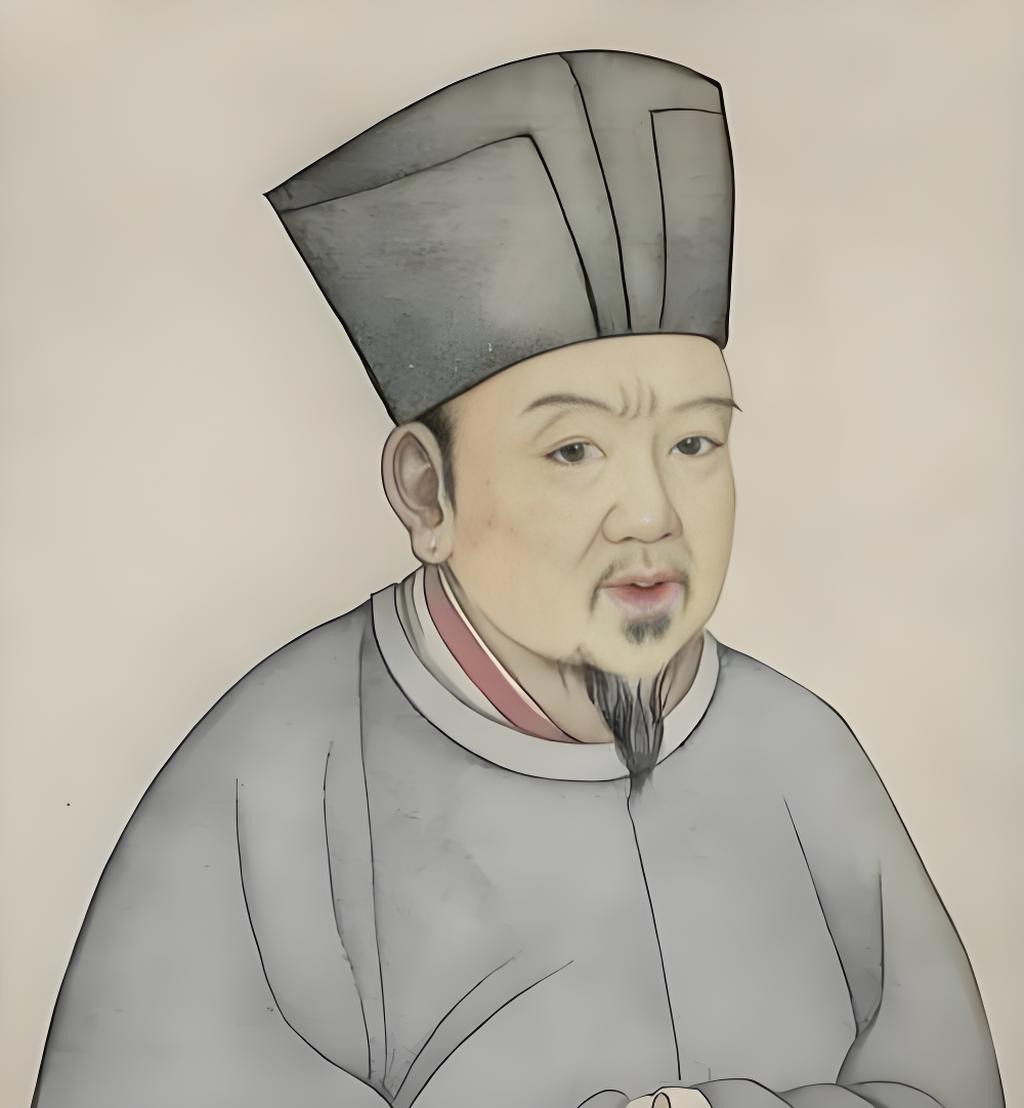
Known across East Asia as the “Hengqu Four Sentences” (横渠四句), these 22 Chinese characters outline the ultimate macro-vision for human existence.
While Western philosophy often treats metaphysics, ethics, and politics as separate sandboxes, Zhang Zai integrated them into a single, scalable operating system for human purpose. Here is a deep dive into what these four sentences mean, and why they have survived the test of time to remain incredibly relevant today.
Decoding the Blueprint: The Four Sentences
To appreciate their power, we must decode each line not just as poetic prose, but as a layer in a comprehensive architecture of human duty.
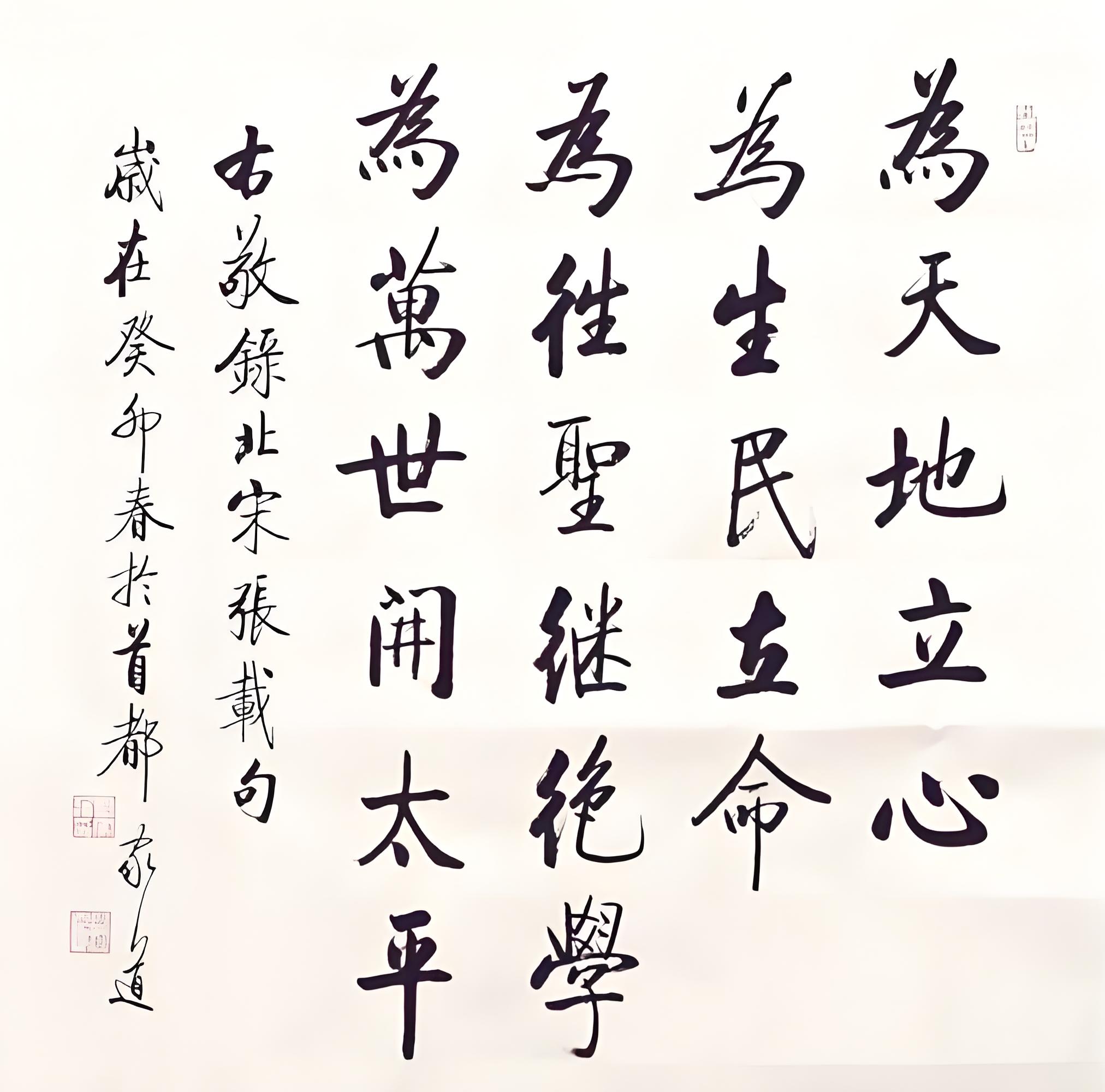
1. To Ordain Conscience for Heaven and Earth (为天地立心)
The ancient Chinese did not view the universe as a machine governed by blind physics, nor did they see it as an anthropomorphic deity. To them, Heaven and Earth represented a vast, silent, and neutral natural order.
Zhang Zai argued that nature itself has no voice or moral preference; human beings are the consciousness of the universe. By practicing empathy, justice, and truth, humanity gives a silent cosmos its “heart” and moral agency.
2. To Secure Life and Fortune for the People (为生民立命)
Philosophy is useless if it doesn’t solve real-world problems. This second line shifts from the cosmic to the social. “Securing life” means ensuring that the masses have the material stability, security, and dignity to thrive. It is a commitment to building sustainable societal infrastructure where every individual can fulfill their potential rather than being crushed by chaotic external forces.
3. To Continue the Lost Teachings of Past Sages (为往圣继绝学)
Wisdom is a continuous pipeline. Zhang Zai lived in an era where traditional cultural values were fracturing. He realized that a civilization loses its way when it forgets its open-source repository of ancestral wisdom. “Continuing the lost teachings” is the duty to preserve, debug, iterate, and pass down core philosophical truths to the next generation, ensuring cultural continuity.
4. To Establish Eternal Peace for Myriad Generations (为万世开太平)
This is the ultimate build target—the final output of the system. Zhang Zai’s vision was not limited to his immediate family or even his own dynasty. He looked across an infinite timeline. The ultimate goal of all knowledge, strategy, and self-cultivation is to deploy a state of Great Harmony (太平 – Tai Ping) that safeguards the future of humanity for generations to come.
Why Have the Hengqu Four Sentences Endured for 1,000 Years?
Many ancient philosophies fade into historical footnotes, yet the Hengqu Four Sentences are still widely quoted in modern global diplomacy, literature, and leadership seminars. Their endurance relies on three unique characteristics:
A Scalable Architecture of Responsibility
The framework moves beautifully from the abstract to the concrete, and from the macro to the micro. It links the individual directly to the Cosmos (Heaven and Earth), Society (the People), History (the Sages), and the Future (Myriad Generations). It leaves no gaps. For an intellectual, it answers the fundamental question of existence: Why am I here, and what am I building toward?
The Spiritual Code of “家国情怀” (Deep Social Commitment)
In the West, individualism often clashes with collectivism. Chinese philosophy solves this through Jia-Guo Qing-Huai—the deep, emotional alignment of the self with the family and the state. The Hengqu Four Sentences represent the absolute peak of this mindset. It transforms personal self-cultivation into a tool for historical engineering. It tells the scholar that their micro-habits and learnings are the bricks used to build universal peace.
A Timeless Vision for Modern Tech and Global Leadership
If you look closely at these four lines, they sound exactly like a high-level, macro mission statement for modern visionaries. Whether you are designing global software architectures, managing server infrastructures, or leading corporate teams, the core challenges remain the same:
- Giving data and systems a human-centric “conscience” (Line 1)
- Creating utility that elevates the user’s daily life (Line 2)
- Honoring and building upon open-source, foundational wisdom (Line 3)
- Ensuring the system is sustainable and peaceful for long-term scalability (Line 4)

Conclusion
The Hengqu Four Sentences have survived because they represent the highest form of pragmatism wrapped in profound idealism. Zhang Zai did not ask humans to escape the world; he demanded that we take full ownership of it.
By defining our duties to the cosmos, the public, history, and the future, these 22 characters provide an eternal northern star for anyone seeking to leave a meaningful legacy on earth.
💡 Editor’s Note: Are you looking to bridge ancient cultural logic with modern strategy? Explore our platforms for more insights into traditional Chinese philosophy, Sun Tzu’s Art of War, and the I Ching.
