

When it comes to ancient predictions, the Western world almost universally turns to the cryptic quatrains of Nostradamus, a 16th-century French astrologer whose writings are believed by many to have predicted the World Wars, the rise of modern leaders, and global pandemics.
However, almost 900 years before Nostradamus put pen to paper, the East had already produced a prophetic masterpiece that was arguably more systematic, complex, and astonishingly accurate: The Tui Bei Tu (推背图).
Often called the “Chinese Nostradamus”, the Tui Bei Tu was compiled during the Tang Dynasty by two legendary astronomers, Li Chunfeng and Yuan Tiangang. But how do these two monumental systems of prophecy compare? Let’s dive into the core differences between the East’s ultimate book of fate and the West’s most famous seer.
1. Format & Style: Quatrains vs. The “Three-in-One” System

The most striking difference between Nostradamus and the authors of the Tui Bei Tu lies in how they encoded their messages to future generations.
Nostradamus: The Power of Text Nostradamus relied exclusively on text. He wrote in Quatrains (four-line poems), utilizing a confusing blend of Old French, Greek, Latin, and anagrams. His primary goal was to make the prophecies obscure enough to avoid persecution from the Inquisition while still leaving breadcrumbs for future interpreters.
Tui Bei Tu: A Multimedia Approach The Tui Bei Tu is a multidimensional system. It does not rely on text alone; instead, it uses a unique “Three-in-One” structure. Each of its 60 prophecies consists of:
- A Surreal Image (Tu): A drawing that often depicts people, animals, or objects in strange arrangements.
- A Poem (Chen/Song): Cryptic verses similar to Nostradamus, but heavily rooted in Chinese historical metaphors and wordplay.
- A Hexagram: A symbol from the ancient I Ching (Book of Changes) that indicates the overarching energy or theme of that specific era.
This combination allows for cross-verification. If the poem is too vague, interpreters can look at the image or the hexagram for further clues.
Curious about how the I Ching principles govern the universe? Learn more in our guide: [Virtue Never Stands Alone: Unlocking Eastern Wisdom].
2. Core Focus: Catastrophes vs. Dynastic Cycles

What did these prophets actually care about predicting? Their differing focuses reveal a fundamental divergence in Eastern and Western worldviews.
Nostradamus: Apocalyptic and Event-Driven Nostradamus was deeply focused on specific, often tragic events: plagues, earthquakes, massive floods, and the deaths of prominent figures (such as his famous prediction regarding the death of King Henry II). His prophecies often carry a heavy, apocalyptic tone, warning humanity of impending doom.
Tui Bei Tu: The Macro-History of Empires In contrast, the Tui Bei Tu focuses on Dynastic Cycles and macro-geopolitics. Rooted in the Daoist belief that the universe operates in cycles of order and chaos, it documents the rise and fall of Chinese empires, from the Tang Dynasty through the Mongol invasion, the Qing Dynasty, and into the modern era.
It is less concerned with a single earthquake and more focused on the shifting mandates of heaven. Interestingly, the Tui Bei Tu is not apocalyptic. Its 59th and 60th prophecies point toward “Datong” (Great Harmony)—a utopian era of world peace.
3. Timeline: Scattered vs. Chronological
This is perhaps the biggest factor that makes the Tui Bei Tu easier to analyze historically compared to Nostradamus.
Nostradamus: The Scrambled Puzzle Nostradamus intentionally scattered his quatrains. They are not in chronological order. A quatrain predicting an event in 1999 might be placed right next to one predicting an event in 1789. This non-linear approach makes it incredibly difficult to know when a predicted event is supposed to happen until after it occurs.
Tui Bei Tu: The Timeline of Fate The 60 prophecies of the Tui Bei Tu are arranged in strict chronological order, moving progressively from the 7th century into the future. Because historians can verify the first 40+ prophecies against known Chinese history (such as the rise of Wu Zetian or the Opium Wars), it is much easier to pinpoint exactly where we are in the timeline today.
Multimedia System
Uses a unique “Three-in-One” structure. Each of the 60 prophecies consists of a surreal drawing (Image), a cryptic poem (Poem), and an I Ching hexagram. This multidimensional approach is rare in world history.
Textual Quatrains
Relies entirely on text, specifically four-line poems known as Quatrains. Nostradamus used a mix of French, Greek, Latin, and anagrams to obscure his meanings and avoid persecution.
Dynastic Cycles & Utopia
Focuses on macro-history: the rise and fall of Chinese dynasties, major geopolitical shifts, and ultimately concludes with the 59th and 60th prophecies predicting “Datong” (Great Harmony or World Peace).
Catastrophes & Figures
Heavily focused on specific catastrophic events: plagues, earthquakes, wars, and the fates of prominent individuals (like the death of King Henry II of France). Often carries an apocalyptic tone.
Chronological Sequence
The 60 prophecies are arranged in a strict chronological order from the Tang Dynasty (7th Century) to the distant future. This makes matching past events to specific prophecies much more structured.
Non-Linear & Scattered
The quatrains are not in chronological order. Nostradamus intentionally scrambled his prophecies, making it extremely difficult to pin down the exact timeline of future predictions.
The 2026 Predictions: What Do Both Prophecies Say?
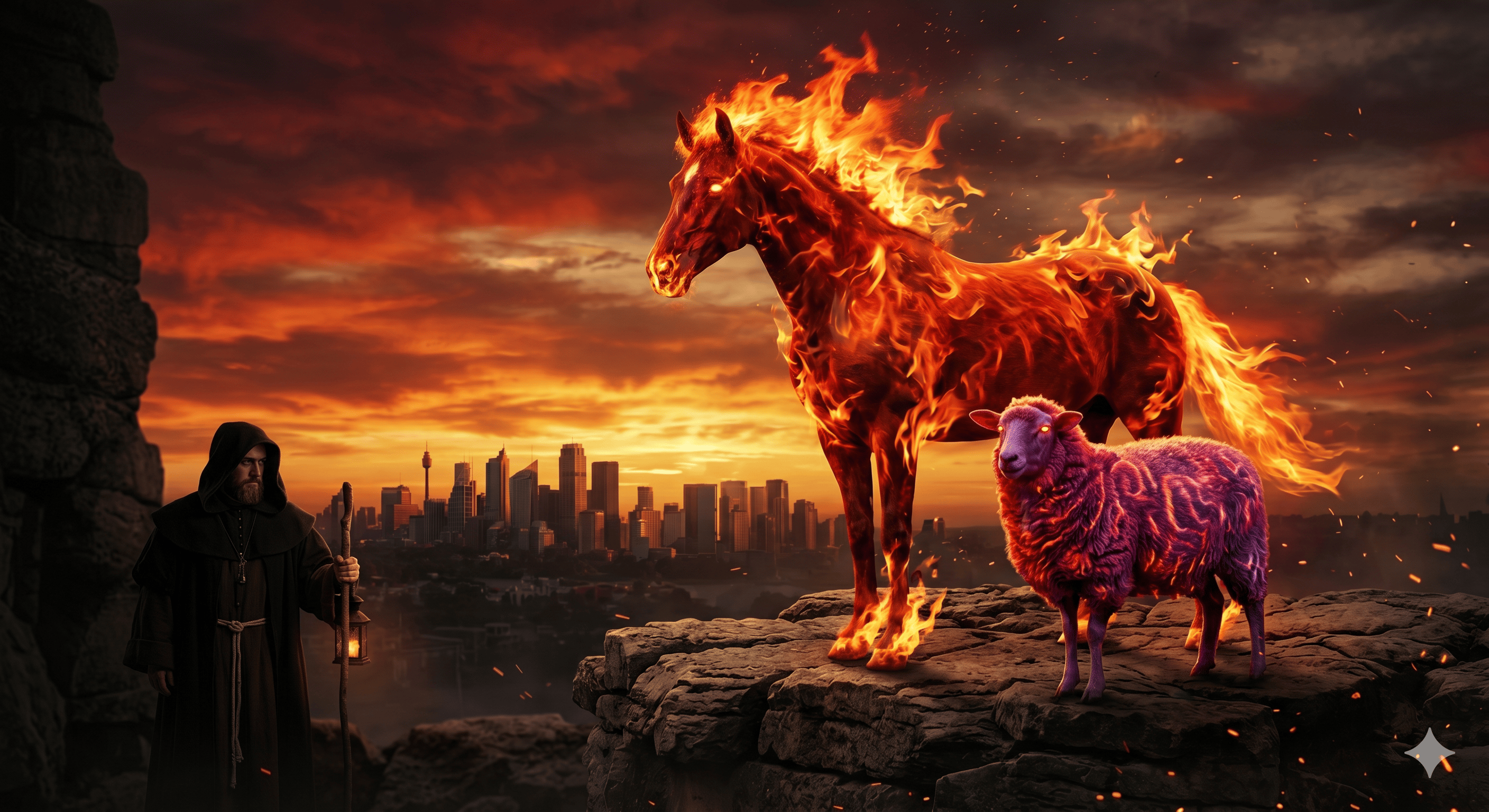
As global tensions rise, many interpreters are looking at both systems for clues about the near future, specifically the period around 2026 and 2027.
In Western interpretations, followers of Nostradamus often point to quatrains describing “great wars in the East” or “naval battles,” interpreting them as potential modern conflicts.
Meanwhile, Eastern scholars are closely analyzing Prophecy 43 and 44 of the Tui Bei Tu. Prophecy 43 famously features an image of a nobleman walking alongside a smaller figure, and speaks of a conflict that is resolved in a surprising manner. Furthermore, in Chinese metaphysics, the years 2026 (Bing Wu) and 2027 (Ding Wei) are known as the “Red Horse and Red Sheep Calamity”, a historical cycle associated with massive societal shifts and transformations.
Discover Your Own Destiny
While Nostradamus and the Tui Bei Tu predict the fate of nations and empires, your personal destiny is mapped by your own unique cosmic blueprint. According to ancient Chinese metaphysics, the alignment of the stars and elements at your exact time of birth shapes your personality, strengths, and life path.
Are you curious about your own elemental energy? Try our highly accurate [Free Bazi & Wu Xing Calculator on Yeetools] to decode your personal elements and see how ancient wisdom applies directly to you.
